
The Pearn's and a short history of our collection
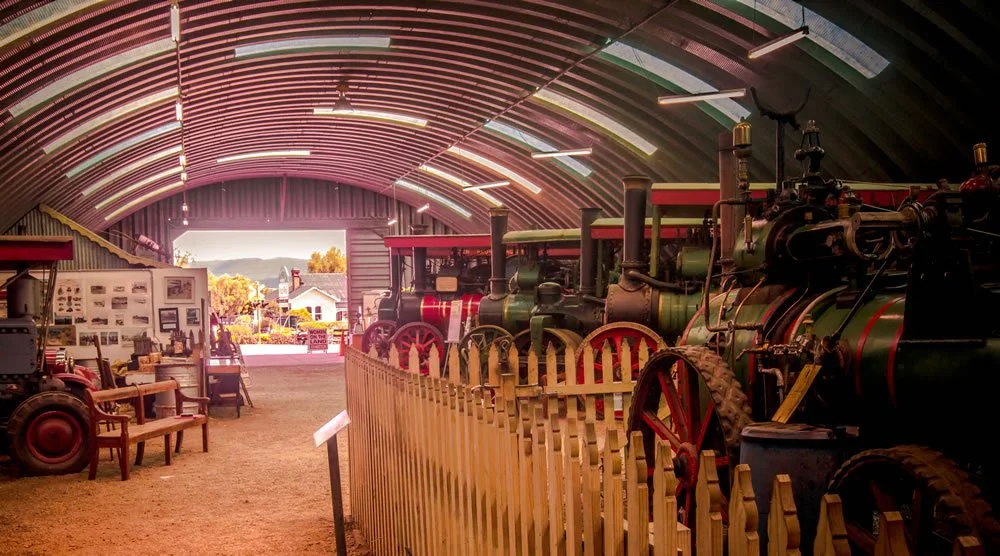
Most of the collection at Pearns Steam World was gathered by the three Pearn Brothers (Jack, Verdun and Zenith) who were third-generation farmers and farming contractors in the Meander Valley, based at Hagley.
As steam-power gave way to diesel and petrol engines, the Pearn brothers saw the need to preserve the engineering history of agricultural life in the region. They collected examples of traction and other steam engines, tractors, farming implements, and other items that show a farming history spanning from hand-tools of the early European settlers through to the pre-mass production era of the 1960’s.
They opened their museum in 1987 as a way to help preserve the history of the area and encourage the next generation of engineers. As the brothers got older, they gifted their collection to the Westbury Preservation Association in 2002.
Pearns Steam World is now owned and operated by the Westbury Preservation Association, which is a community-based, not-for-profit, volunteer organisation that includes Pearn family members as well as others interested in the mechanical history of the area.
A Start in a New Country - Immigration from England
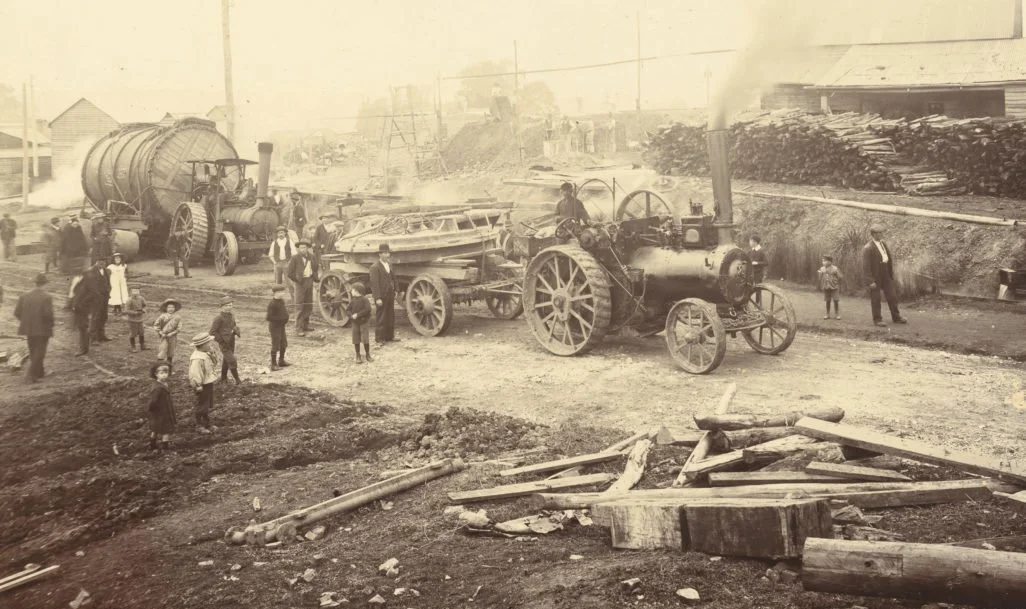
Left a widower with three surviving children, William, John and Sarah, John Davis Pearn married his children’s governess, Redigan Brown, and migrated to Tasmania from Cornwall aboard the “Wellfleet” in 1858. John Pearn Jnr was 9 years old at the time. John Pearn Snr had been encouraged to come to Tasmania as skilled tradesmen and craftsmen were in short supply.
He wrote in his diary: “On January 18, 1858 (Munday) we left Plymouth about 6 o’clock and everything was in confusion on board that night, some of the passengers had no birth, they were obliged to ly on the tables that night, we all had our births and I made up our beds and got in all my boxes – except my toolchest which was put below.”
John Pearn Snr was a wagon maker as well as a skilled cabinet maker and coffin maker and prospered as a tradesman and as a farmer. The family leased and eventually bought a small farm in the Whitemore district.
Agricultural Contracting Begins
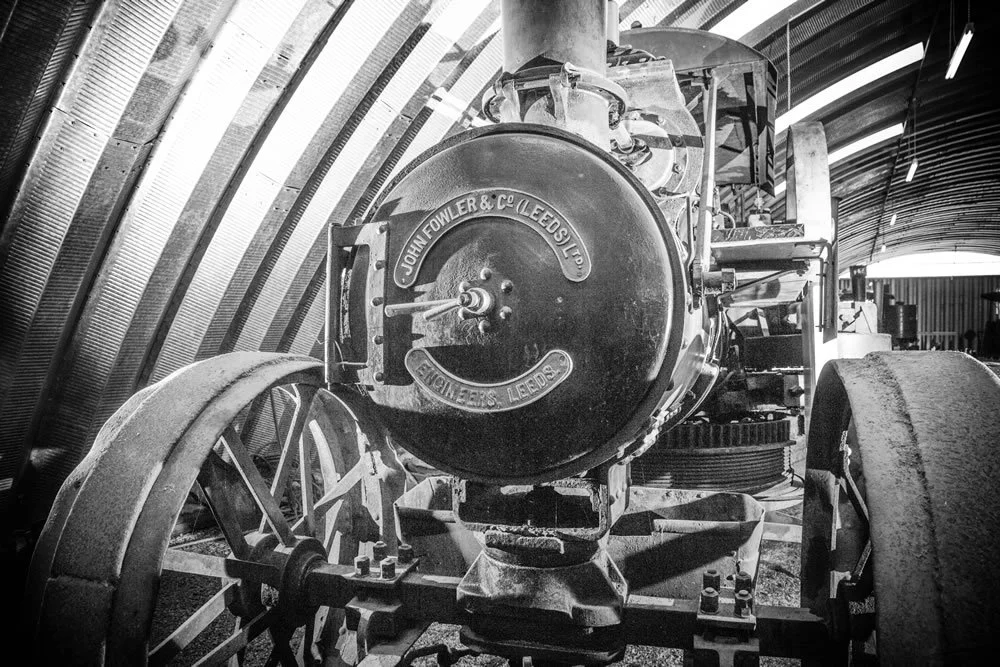
One day John Pearn Jnr went to Cluan Homestead, which was then occupied by Mr. Hall, to see if he had any work. The interview must have been successful, as he ended up both working for Mr. Hall and marrying his daughter Edith in 1870 at the age of 21. In 1885, he purchased a Robertson threshing drum and a portable Marshall steam engine. The Robertson drum is now part of the Pearns Steam World collection.
John died in 1900 as a consequence of an accident caused by lowering the chimney stack from a portable steam engine and Edith was left to raise and care for a family of eight. With the money from John’s insurance, Edith updated the family’s agricultural machinery and developed the agricultural contracting business based at “Alvira”. A Marshall single cylinder, eight horse power traction engine was bought in 1900 for £600. A new threshing drum, chaff cutter and press for hay and straw baling were also bought.
-
The annual harvest began with Howard’s at Cressy, and gradually worked to Bracknell, Whitemore, Cluan, Glenore, Adelphi, and through to Dairy Plains. A total of 67,000 bushels a season was threshed. Two of John and Edith’s children were the twins Edward (Ted) and Henry (Harry), born in 1884. The twins worked with Edith to build up the contracting business that John Pearn had started.
Edith Pearn was resolute in ensuring that the local farmers did not take advantage of her position as a woman operating a business in an industry dominated by men. Apparently, some would try to take advantage of her by objecting to payment but her statement of:
“I will take your insults as compliments and allow for arrogance. Anyone with any breeding would not behave in such a manner” was renowned for achieving settlement of any outstanding accounts.
Edward married Eliza Rockliff, and their 3 sons worked with their father in the family business. These brothers were John (born 1914), Verdun (born in 1916, the year of the Battle of Verdun in France), and Zenith (born 1923, allegedly named after the Zenith carburettor). Gwyneth was born in 1927 and a second daughter Joan died as a teenager in 1934.
The brothers Edward and Henry eventually developed their own businesses. Edward concentrated on agricultural contracting from 1935, after a period as a car salesman. Henry worked with heavy earthmoving machinery. The business started by Henry is still operated by family members who have also diversified into livestock carting. These are now significant businesses in Tasmania.
In 1935 new machinery was bought including; a 1910, 8 horsepower Foden traction engine; a five-foot Garrot Drum; an Andrew and Bevan Chaff Cutter and rebuilt a straw press. These were used until 1950.
Edward’s three sons, John (Jack), Verdun and Zenith (Zen), worked in the district with their father until World War 2. The business was based on their farm “Sunnyside” at Hagley. Jack and Zen were conscripted into the army and Verdun worked the contracting business with his father and then his mother Eliza and sister Gwyn after Edward died in 1944. After the War, the sons re-established the business which became “Pearn Brothers, Hagley”.
The Collection Begins
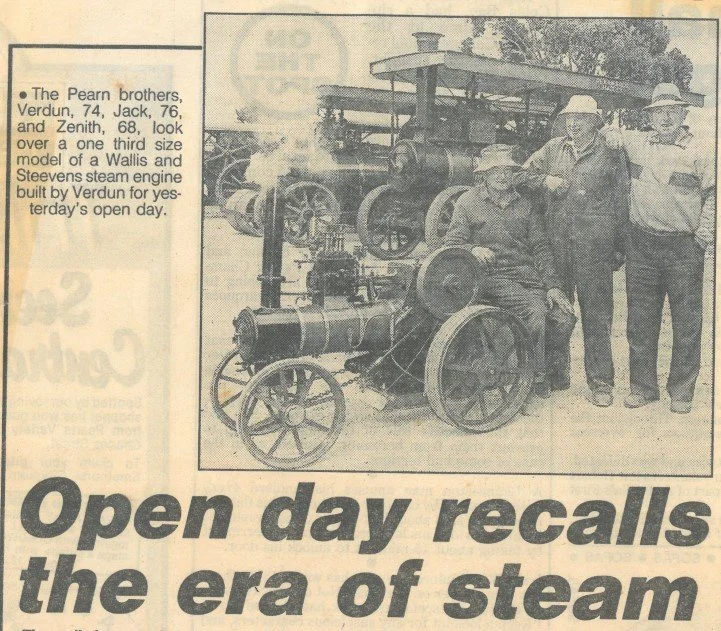
In the 1950’s, the Pearn brothers saw that the age of steam and threshing was giving way to tractors and self-propelled headers. The last contracting job completed by the thresher was carried out in 1953. The steam engines and other machines used by the Pearns were kept in good working condition. Sixteen more steam engines were purchased by the Pearns from farmers who were selling off their engines for scrap. They decided to collect a representative sample of the steam engines operating in the state.
They were already operating Marshall and Bulldog tractors on the farm and in the business. When other farmers and sawmillers sold their machines for scrap, the Pearn’s purchased many of them for their collection. Spare time was not used for recreational activities, instead it was used to polish and paint the engines.
And so began the Pearns collection of steam traction engines and farm machinery, a hobby that involved all members of the family in recovering, restoring and operating the giants from the past and eventually creating the largest private collection of its kind in the Southern hemisphere at that time.
-
Steam rallies were held at the family farm, “Sunnyside”, during the 1960’s with thousands of dollars raised for Red Cross and Rotary. Steam engines were taken to both Launceston and Westbury shows: The engines were driven to the shows. This slow process may have taken one engine seven hours to complete and at a speed of a fast-walking pace. This commenced in 1972 and continued for another fourteen years. Other trips made by the engines were to Deloraine, Devonport, Symmons Plains and Cressy, either for shows or agricultural displays.
In the 1980’s the collection moved to its present location, on the site of the old Westbury saleyards. With the help of Rotary, Apex and a few volunteers, they established one shed. By fund raising, the volunteer organisation of Pearn’s Steam World managed to raise enough money to build a second shed, costing $80,000. Funds raised at the Steam Rallies built the Red Cross retirement homes in Westbury and the children’s road safety training facility in Launceston.
With the move to the present site, the Westbury Preservation Association Inc was formed to protect the collection for future generations. The collection is now owned and operated by the members of the Westbury Preservation Association, which includes Pearn family and a team of enthusiast volunteers.
The Pearn Brothers
Edith Pearn
(nee Hall)
1849 – 1936
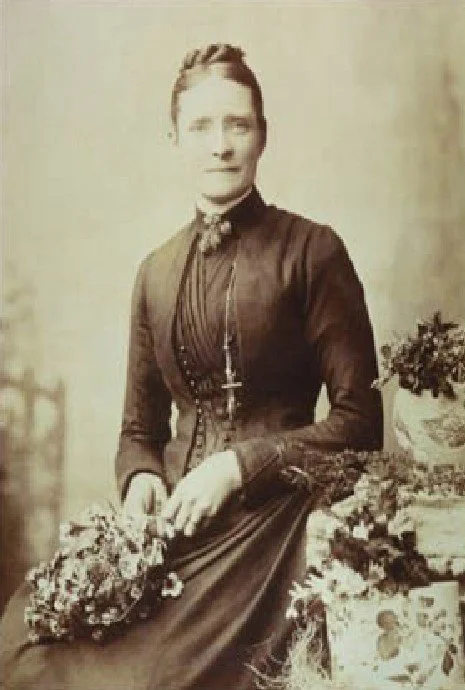
Edith Pearn was a true farming pioneer. For over 30 years she was a highly successful agricultural contractor at a time when agricultural businesses were dominated by men.
Born in 1849, Edith Hall was in her late teens when John Pearn came looking for work on her father’s farm. Two years later they married. The couple had eleven children, although three died early in life, including two from diphtheria in the same week. Eventually the Pearns were able to buy their own property, known as ‘Alvira’. In 1885 they began to augment their farm income by contract grain harvesting for neighbouring farmers using their steam driven harvesting equipment.
But tragedy struck in 1900 when John died as the result of a farming accident. Left alone to support her large family, Edith took a courageous decision. She resolved to expand the contracting business using John‘s insurance money to upgrade the family’s harvesting machinery. It was an enormous gamble for a woman on her own.
Edith’s first purchase was a Marshall single cylinder, eight horse power traction engine for which she paid £600, a very expensive purchase for the time. She also purchased a new threshing drum, a chaff cutter and a press for hay and straw baling. Her original threshing drum remains part of this collection.
Assisted by her two eldest sons, sixteen year old twin boys Henry and Edward, Edith set about expanding the business, threshing close to 70,000 bushels of grain a year.
Recorded in many farm ledgers of the area simply as ‘Mrs Pearn, Contractor’, Edith was respected as an astute business woman with a sound knowledge of local farming practices. When Edith died aged 87, she left behind a thriving enterprise. Today, four generations later, Edith’s descendants operate well known agricultural businesses transporting livestock, cleaning seed and supplying large earth moving and grain harvesting equipment all over Tasmania.
Eliza Pearn
(nee Rockliff)
1883 – 1962
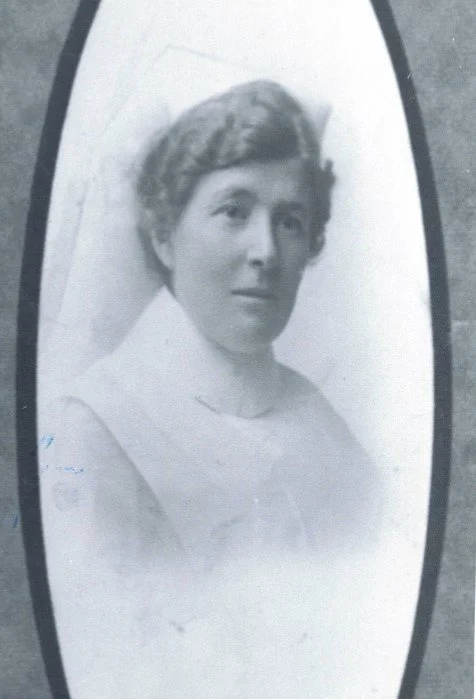
In 1883 Eliza Pearn was the first white female born in Numurkah, Victoria. Her parents, John and Eliza Rockliff, had travelled from their Tasmanian home on horse and dray to pioneer farming in this new developing area. As the eldest of four children, one of her first farm tasks was to chase large mobs of sheep up and down the paddock to push the freshly spread grain firmly into the light soil to ensure germination.
Sadly, due to the lack of medical assistance, her mother died of peritonitis when Eliza was just 12. This may have prompted Eliza at the age of 17 to train as a nurse at the Royal Prince Alfred Hospital in Melbourne, costing her father the large sum of £50 a year.
In her late 20’s Eliza came to Tasmania with the intention of becoming the Matron at the Beaconsfield hospital. However, she met Edward Pearn at a picnic and her formal nursing career was over as she took on the role of a farmer’s wife.
The couple were married in 1914 and set up home at ‘Coonara’, at Adelphi near Whitemore, and went on to have five children; John (Jack), Verdun, Joan, Zenith and Gwyneth. Sadly Joan died at the age of 15 from a now treatable medical complaint. As one of the few trained nurses in the district, Eliza was often called on to assist local families at times of life and death.
In 1928 the family purchased their own property “Sunnyside” at Hagley.
During the 2nd World War, Jack and Zenith were called up for Active Service. In 1944, while these two sons were overseas, her husband Edward died, leaving Verdun and Gwyneth to operate the family farm and contracting business. Gwyneth spent much of the war years driving a team of horses on tasks such as ploughing and cutting peas, in addition to her household duties. Eliza kept a close watch on the farm accounts and the business thrived. Following the return of Jack and Zenith from the Australian Army, the family began trading as “Pearn Bros. Hagley”. A gifted pianist, Eliza’s piano was often carried down to the barn so that the locals could enjoy a night of fun and dancing.
She was a great cook and was regularly required to feed large numbers of men often at very short notice.
Despite being the matriarch of a one of the most mechanically minded families in the district, like many women of her generation, she never learned to drive a car. Eliza died in 1962 at the age of 78 years.